Why you need to ditch 'perfect' for 'real'
If you're like me, you may be wondering why everybody's marketing (especially on social media) looks the same right now. It's a sterile, over-polished aesthetic that dominated commercial photography for the past decade and it's dying a slow, well-deserved death.
The industry is experiencing a rebellion. Brands want grit and consumers are demanding authenticity. You can now buy your almost exact copies of your competitors' social videos branded to your business for only a few dollars! The big AI content-generation push is getting noticed and audiences are rejecting it.
The glossy perfection that once defined commercial work has become visual wallpaper while audiences scroll past it without a second glance. Even my 8-year old niece recently saw an image and told me confidently, "That's AI". Images that feel stolen from real life rather than staged in a sterile studio.
As a consequence, I'm providing my clients visible grain, motion blur, and even the occasional focus miss which are traditionally "flaws" yet signal authenticity in a market drowning in artificiality. When Patagonia runs campaigns featuring off-center compositions and natural lighting that creates harsh shadows, they're not cutting corners. They're cutting through.
Here's where things get complicated. Artificial intelligence tools have become standard equipment, but not in the way futurists predicted. Photographers aren't being replaced but instead are being augmented by AI handling background removal, basic color correction, and organizing thousands of shots from a single session. This frees me to focus on concept, lighting, and that indefinable human element that algorithms still can't replicate.
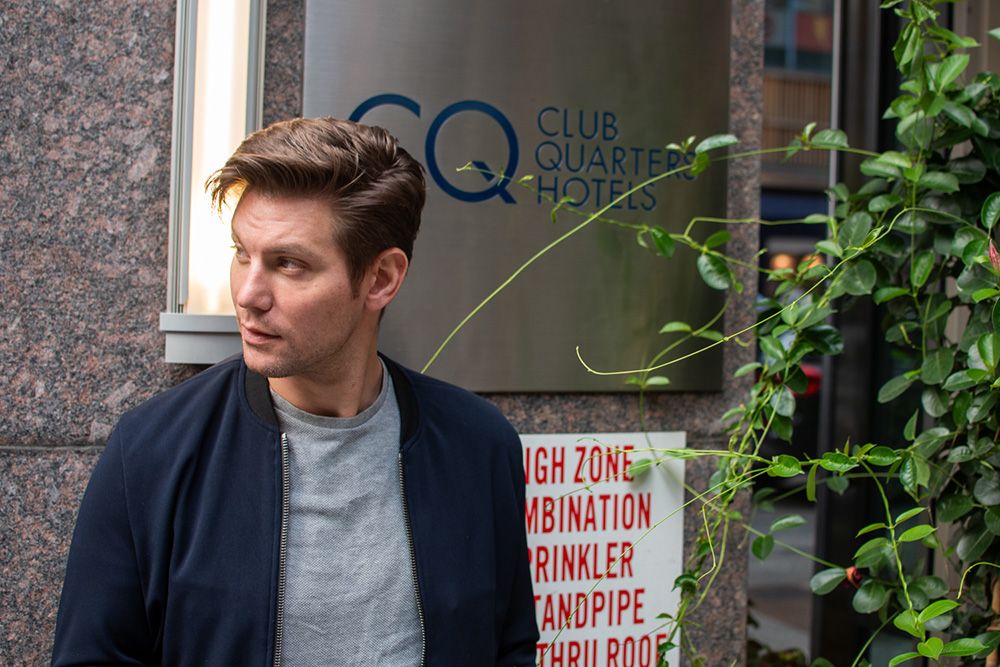
Does the photo above "feel real" to you? It's got a facial softness and enough background elements to truly represent what I found on the street in NY for CQ. Even their marquee had been temporarily dented by a tall truck. When was the last time you knew a perfect image was TOO perfect.
Long story, short: Static perfection is out and dynamic, real-world energy is in. And my goal is to capture feeling over technical precision.
This is how people want to consume visual content now and images need to create an immediate emotional response. Embracing imperfection means trusting that your audience values authenticity over polish. Early adopters are seeing stronger engagement metrics, particularly with younger demographics who've developed sophisticated filters for detecting artificial marketing.
Commercial photography in 2026 isn't about following a single aesthetic and the images that work are the ones that feel honest, even when they're carefully constructed. The cameras have changed and the software has evolved.
But the fundamental job remains: telling stories that connect.
Share with me your thoughts on how AI is changing how you view not only your company's image but the world in general.