
What do people think about your business?
Thanks to our websites and social media platforms, your potential clients have the ability to form an opinion about you and your organization. And long before any conversation begins, you have already introduced yourself. This all happens 24/7 and in invisible moments which you might never know about.
Someone lands on your website, a potential client scrolls through your social feed, or a warm referral looks you up to validate your work before reaching out. In each case, a decision starts forming almost instantly and isn't based on a deep understanding of your services and it's based on how your business feel.
That feeling is your visual brand.
The challenge that I face with my clients is that most businesses don't actively work to shape that perception and few even understand this to be a priority. They assume their work will speak for itself (which it sometimes it does) or their personality will eventually help build the trust they hope to establish. But most often, the never get the chance because perception happens first.
As unfair as it seems, prospective customers decide in seconds whether to trust you or move on.
It's easy to think of branding as logos, taglines, and images and, while those things matter, they're only part of the story. Your brand lives in the gaps between those elements. It is the quality of your images, the authenticity of what you're showing, and the tone of your messaging. We're visual creatures and it is critical to realize that the impressions people form is rarely from what you've written.
When your visual brand aligns with you, your business story, and the fulfillment of your customers then your business feels intentional. When these things don't work together then something feels off even if a viewer can't explain why. And when that subtle disconnect happens, any trust you've developed with your prospect begins to erode.
Decision-making is instinctive. Too often people scan, compare, and move quickly. If your brand appears clear, cohesive, and confident, they're more likely to stay. If it feels scattered or outdated, they move on. Not because your offering isn't strong but because the presentation didn't create confidence. One of the most common issues my clients face is inconsistency in their visual branding. The website looks polished, but social media feels casual. Or their messaging is strong but the visuals don't support it. Most often the photography varies in style, tone, and quality.
Consistency with your Visual Brand doesn't mean everything looks identical but rather that everything feels connected. When your brand has a clear visual identity, every touchpoint reinforces the same impression.
The good news is that you can actively manage how people think about your business. You can take control of your branding and not leave interpretation up to your viewers. Taking control like this doesn't mean over-polishing or removing your personality but instead is an act of intentionality. It means deciding how you want to be seen and aligning your visuals, messaging, and presence to support that vision.
Branding is often treated as something to revisit later - after growth, after new hires, after the next milestone. But the truth is, your brand is influencing those outcomes right now. It affects who reaches out, who trusts you, who refers you, and who ultimately chooses to work with you.
The question is not whether you have a brand.
The question is whether you're guiding it.
I've introduced a new service where I can help assess your visual brand and provide advice and actionable items for how you can improv how your business shows up, builds trust, and converts interest into real customers. It is critical to be able to see your business the way your customers do and to fix what might be costing you with regards to visibility, market penetration, and trust.
Contact me today to see how I can get this done for you...
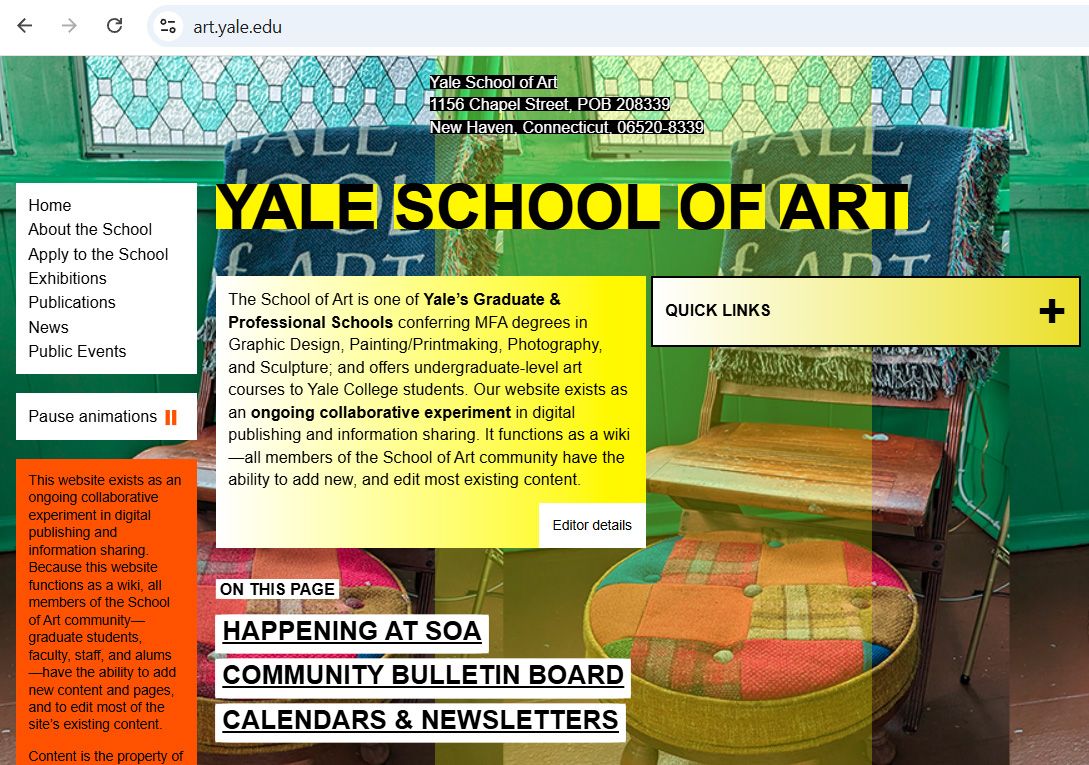
(A fun example, at first glance, the website below looks horrible but is a great example of engaging their intended audience.)